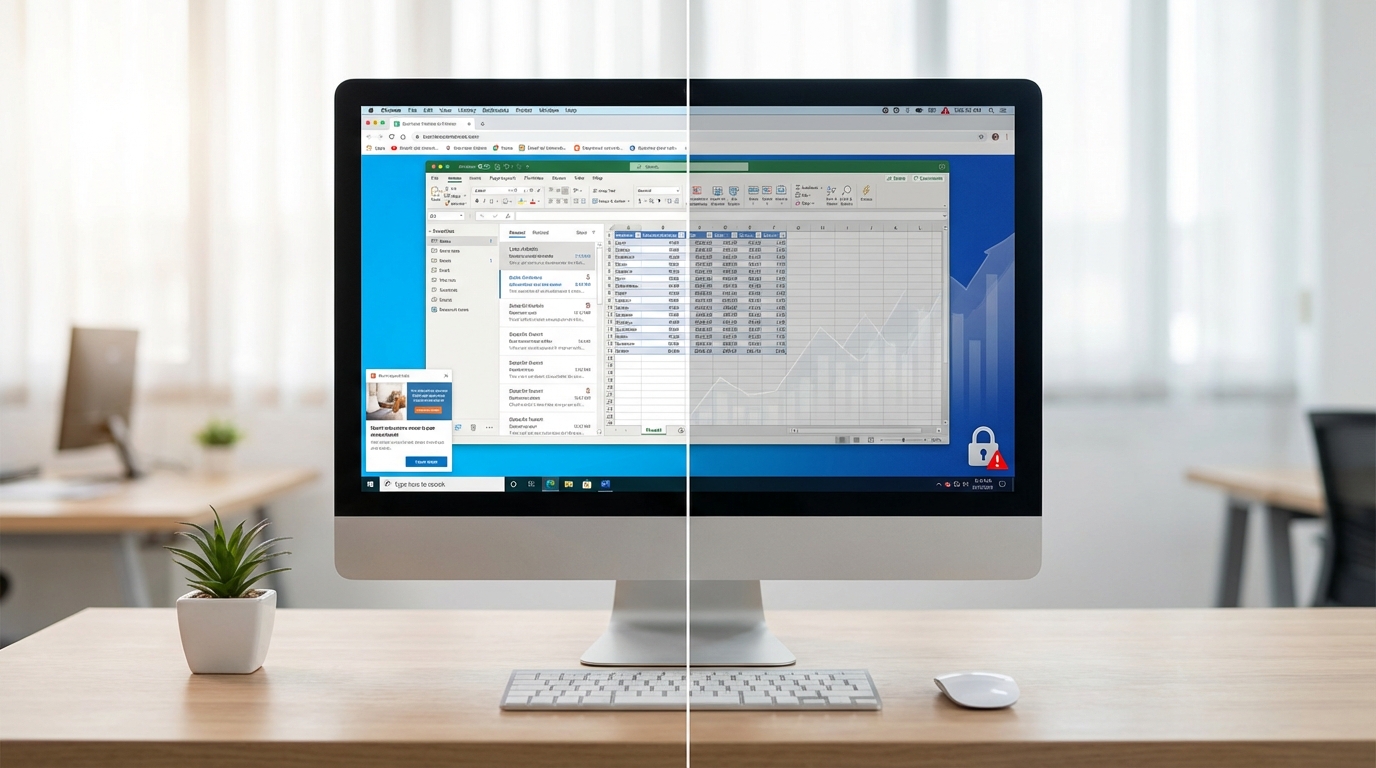
What is the difference between adware and spyware? Adware is malicious software that bombards your devices with unwanted advertisements and slows your systems down, while spyware silently monitors your activity to steal sensitive data such as passwords and financial information. Both pose serious risks to small businesses, but spyware carries a significantly higher potential for data breach and financial loss.
For a small business owner, a slow computer or a compromised network is more than just a frustration — it is a direct threat to your productivity, client data, and professional reputation. When your systems start acting strangely, the first step is identifying the culprit. Are you dealing with a relatively benign but annoying adware infection, or a severe spyware breach designed to steal your company’s sensitive information?
Adware vs Spyware — Key Differences for Businesses
| Feature | Adware | Spyware |
|---|---|---|
| Primary Goal | Generate revenue by forcing you to view advertisements. | Steal sensitive data (passwords, financial info, client data). |
| Business Impact | Slows down networks, disrupts employee productivity, causes browser crashes. | Leads to data breaches, compliance violations, and financial theft. |
| How it Spreads | Often bundled with “free” software downloads or browser extensions. | Exploits system vulnerabilities, phishing emails, or malicious links. |
| Visibility | Highly visible (pop-ups, hijacked search engines). | Designed to be completely invisible and run silently in the background. |
Why This Matters for Small Businesses
Understanding the difference between these two threats is critical for your incident response. If an employee’s computer is infected with adware, the immediate cost is lost productivity. The machine will run slowly, cloud applications will lag, and the employee will be bombarded with distracting pop-ups.
However, if the infection is spyware, the stakes are exponentially higher. Spyware actively monitors keystrokes and network traffic. For a small business, this means the attacker could be capturing login credentials for your CRM, accounting software, or business bank accounts. A spyware infection is not just an IT problem; it is a potential data breach that carries severe legal and reputational consequences.
How to Tell Which One You Have
Because spyware is designed to be stealthy, you will rarely see obvious signs of its presence until the damage is done. Adware, on the other hand, is loud. If your employees are complaining about sudden browser slowdowns, mystery toolbars, or aggressive pop-ups, you are likely dealing with adware.
Removing Adware and Spyware
Removing adware starts with scanning systems using adware removal tools. If you’re not sure you have an infection, check the signs of an adware infection first. Employees can also uninstall suspicious programs and browser extensions.
Adware removal is straightforward. However, spyware can be more challenging due to its covert nature. Spyware removal requires specialized tools capable of detecting and eliminating stealthy infections.
How to Keep Safe
To prevent future infections, businesses should practice safe browsing habits. This means establishing clear policies against downloading unverified software on company devices.
Regular system and software updates are vital for patching vulnerabilities exploited by spyware.
Be cautious and use reliable, AI-powered security tools! This can help cut the risks of both adware and spyware across your entire network.